
Homeowners often spend $600 to $6,000 on new garage doors. The average cost is about $2,500. Prices change based on the material, size, and features.
A basic steel door starts around $600. But, custom designs can cost over $10,000. Coastal areas might charge more for labor than the Midwest.
Garage doors are not just useful. They also make your home look better, covering up to 30% of its outside. Insulated doors cost $600 to $3,000+, and basic ones are under $500.
The Remodeling Cost vs. Value Report shows a 102.7% ROI for new doors. This makes it a smart and profitable choice.
Materials like aluminum ($400–$2,600) or wood ($1,500–$6,500) affect the price. Labor costs $150 to $700. Installing a door takes half a day to a full day.
This guide helps you pick between cost and looks. You can make a choice that fits your needs.
Quick Reference: Typical Phoenix Metro Pricing
| Door Type | Typical Phoenix Metro Estimate |
|---|---|
| Sectional steel door, non-insulated | $600 – $1,250 |
| Sectional steel door, insulated | $800 – $1,550 |
| Carriage-style steel door | $950 – $2,000 |
| Genuine wood door | $1,700 – $3,800 |
| RV bay / oversized door | Contact us for an estimate |
Pricing is an estimate. Your final cost depends on your garage door’s size, weight, condition, and the parts and work needed. Additional repairs may involve rollers, cables, hinges, mounting hardware, tracks, or other components. Your technician will inspect the door and explain the recommended work and full price before any work begins.
Understanding Garage Door Types and Their Costs
Choosing a new garage door is about finding the right mix of style and cost. The average cost of new garage doors can be from $600 to $8,000+. This range depends on the type of door. Here, we look at four popular styles to help you make a good choice.
Sectional Garage Doors: Features and Pricing
Sectional doors are the most common. They have horizontal panels. Prices typically start around $600 for basic steel models and run up to about $1,550 for insulated or decorative options.
- Horizontal panels make them easy to install in most homes.
- Steel models are affordable, starting under $1,000.
- Custom finishes or extra insulation add $300–$500.
Roll-Up Garage Doors: Pros and Costs
Roll-up doors coil vertically, saving space. They cost from $600 to $3,000. They are great for:
- Space-saving design for low-ceiling garages.
- Steel models start at $600, while insulated versions cost up to $3,000.
- Heavy-duty tracks add $200–$400 to installation.
Swing-Out Garage Doors: Style and Price
Swing-out (carriage-style) doors offer classic looks. Steel carriage-style doors typically run $950–$2,000, while genuine wood versions run $1,700–$3,800 due to the material and craftsmanship involved. They feature:
- Wood or composite materials for traditional looks.
- Basic steel carriage-style versions start around $950.
- Genuine wood or hand-carved options typically range from $1,700 to $3,800. RV bays and oversized openings (8′×12′, 7′×12′, or larger) fall outside standard sizing — contact us for an estimate specific to your door.
Custom Garage Doors: When Quality Meets Cost
Custom doors let you design a unique door. They often cost $3,000+. Prices are affected by:
- Material choices like premium wood or tempered glass.
- Special hardware adds $500–$1,000.
- High-end models with automation can exceed $10,000.
Knowing these price ranges helps narrow your options. Think about what you need and can afford. This ensures you get a door that fits your style and budget.
Factors Influencing Garage Door Prices
Garage door prices change a lot. This is because of the material, insulation, and design. Knowing these key factors influencing garage door cost helps you make good choices. Here’s what’s important:
Material Quality: What You Should Know
Choosing the right material affects the price. For example:
- Steel starts at $400 but goes up with thicker gauges (lower gauge = stronger, costlier)
- Solid wood doors can cost over $3,000 because they are durable and well-made
- Fiberglass is in the middle price range ($800–$2,500) and is easy to take care of
Insulation Value and Its Impact on Cost
| Insulation Type | R-Value | Cost Increase | Long-Term Savings |
|---|---|---|---|
| No insulation | 0 | N/A | Up to $200/yr in energy loss |
| Standard foam | R-7 to R-12 | $150–$300 more | 10–20% energy cost reduction |
| Premium polyurethane | R-16+ | $400–$600 extra | Up to 30% savings on HVAC use |
Design Complexity: How Style Affects Pricing
Designs with more details can increase the factors influencing garage door cost:
- Windows: $100–$300 per window panel
- Decorative hardware: $50–$200 per piece
- Custom curves/arches: +$500–$1,200
More complex designs also need special labor. This can add 15–25% to the installation cost.
Average Costs of Common Garage Door Materials
Choosing the right material affects both looks and cost. The average cost of new garage doors varies. Prices start at $300 for basic steel and go up to $8,000 for premium wood. Knowing these prices helps match your budget to your needs.
Steel Garage Doors: Finding Affordability
Steel is the most popular for its durability and low cost. Prices typically range from $600 to $2,000. Thinner steel costs less. New garage door prices go up with extra features like insulation or fancy finishes. Steel doors are also good at resisting dents and rust, making them a smart choice for the long run.
Wood Garage Doors: Balancing Beauty and Budget
Wood adds a classic look but needs more care. Prices typically start around $1,700 for standard wood species. Premium mahogany or fully custom hand-carved doors can cost $3,800 or more. Remember, you’ll need to seal and stain your wood doors every year, adding to the cost.
Fiberglass Garage Doors: Pros and Cons
Fiberglass is a mix of style and easy care, priced from $350 to $5,000. These doors don’t rot but might dent if hit hard. Think about your climate and design wants when choosing.
| Material | Price Range | Key Features |
|---|---|---|
| Steel | $600–$2,000 | Durable, customizable finishes |
| Wood | $1,700–$3,800 | Natural grain, requires sealing |
| Fiberglass | $350–$5,000 | Weather-resistant, lightweight |
Installation Costs and Considerations
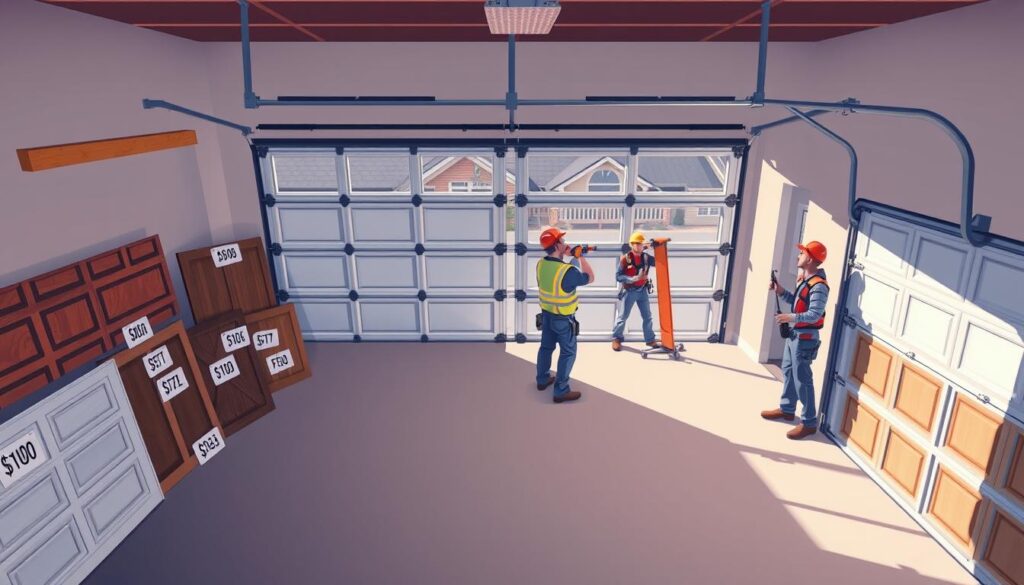
Knowing the cost to install new garage doors is more than just the door price. Professional labor costs $300 to $500. The garage door replacement cost also changes based on where you live and the type of door. Don’t try to do it yourself to avoid losing warranty and safety benefits.
DIY vs Professional: Risks and Savings
Doing it yourself might save $200 to $500. But, it can also hurt you if you mess with high-tension springs. Pros make sure everything is safe and legal. They also protect your warranty.
Hidden Fees to Budget For
- Old door removal: $50-$200
- Electrical upgrades: $100-$2,500
- Custom modifications: $500-$2,000
Regional Price Differences
Prices for a garage door installation change based on where you are. Places like San Francisco cost 30% more than the Midwest. Urban areas charge $450 for labor, while rural areas charge $250. Always check local costs and permits before planning your budget.
Features That Add to the Cost of Garage Doors
Choosing garage door features affects pricing for new garage doors. Smart tech and design can make doors safer and look better. But, they also cost more. Knowing what makes prices go up helps you plan your budget.
Smart Garage Door Opener Features
Modern openers make life easier but cost more. Basic ones start at $150–$250. But, top models with cameras or app control can cost $350–$500+.
Features like Wi-Fi, battery backups, and motion sensors also increase prices. For example, a belt-drive opener with smart features costs $350–$450. These upgrades add security and remote access, making them worth the extra cost.
Decorative Hardware: Enhancing Your Door
Decorative parts like hinges, handles, and window inserts can cost $100–$500. Simple parts start at $30, while fancy ones like forged iron or custom designs cost $200–$300. Adding glass windows can cost $115–$1,200, depending on size and style.
Upgrading to LED lighting or etched designs also raises the price. For instance, a Clopay door with decorative glass might cost $500 more than a basic one. These choices show your style but need careful budgeting.
Lifespan and Warranty Considerations
Choosing the right garage door material and warranty is key. It makes sure your budget for new garage doors is worth it in the long run. Look for options that offer good value upfront and last long without needing many repairs.
Average Lifespan of Different Materials
What you choose affects how long it lasts. Steel doors can last 15–30 years with some care. Wood doors might last 10–25 years, depending on the weather.
Fiberglass doors usually last 15–20 years. But, bad weather or not taking care of them can make them last shorter.
| Material | Average Lifespan | Key Factors |
|---|---|---|
| Steel | 15–30 years | Maintenance, climate |
| Wood | 10–25 years | Sealing, pest control |
| Fiberglass | 15–20 years | UV exposure, moisture |
Importance of Warranty Coverage
Warranties help save money by covering problems. There are a few main types:
- Limited Lifetime: Covers door structure for material flaws
- 10-Year: Protects panels against warping or cracking
- 1–5 Year: Applies to parts like springs or motors
Warranties don’t cover normal wear or damage from accidents. Make sure a certified pro installs it to keep the warranty valid.
Extended warranties are a good idea for doors that get used a lot. Choose warranties that fit your area’s weather and how much you use your door to avoid extra costs.
Maintenance Costs for New Garage Doors
Keeping your garage door in good shape adds to the budget for new garage doors. But it makes them last longer. Regular care stops expensive fixes and keeps you safe. Even simple tasks like oiling the tracks can save a lot of money.
Regular Maintenance Expenses to Budget For
How much you spend each year depends on if you do it yourself or hire a pro:
- Professional inspection/lubrication: $80–$150 annually
- DIY supplies: $20–$50 yearly (lubricants, weatherstripping)
Adding these costs to your how much do new garage doors cost plan helps save money in the long run.
Potential Repairs and Their Impact on Costs
Here are some common repairs and their prices:
| Issue | Cost Range |
|---|---|
| Spring replacement | $150–$350 |
| Opener repair | $85–$500 |
| Cable/chain replacement | $150–$200 |
| Track realignment | $125–$190 |
Emergency repairs can cost $100–$300 more than usual. Labor alone can be $75–$150 an hour.
“Regular inspections prevent small issues from becoming major replacements.”
Custom or wood doors might cost 20–40% more to fix than standard steel ones. Budgeting for both regular care and unexpected repairs keeps your initial how much do new garage doors cost estimate realistic. A well-kept door can last 15–30 years, saving you money in the long run.
Energy Efficiency and Long-Term Savings
Choosing an energy-efficient garage door can make your home more comfortable. Insulated garage doors help save energy, which is a smart choice. Even though new garage door prices change, the long-term savings are often worth it.
Upgrading to an insulated garage door can reduce energy bills by up to 71%.
Benefits of Insulated Garage Doors
Insulated doors with R-values between 6 and 18 are very good at keeping heat out. Doors with R-values of 12 or more keep garages 10–20°F cooler in summer. They block drafts and keep the temperature steady inside.
These doors also make your home more comfortable. They can even make your home more valuable. This is because people like homes that are good for the planet.
How Energy Efficiency Affects Overall Costs
When you buy a garage door, the cost depends on how well it’s insulated. Adding insulation can cost $200–$600 more. But, you can save $50–$200 a year on energy.
Doors that meet certain standards can save you even more money. This means you can get your money back in 5–10 years.
Some doors qualify for tax credits or rebates. This can make them even cheaper. Keeping your door well-sealed and maintained helps it work better for longer.
Insulation saves energy and helps the planet. It also saves you money and makes your home more comfortable. It’s a good choice for any homeowner.
Tips for Saving Money on Garage Door Replacement
Getting a new garage door doesn’t have to cost a lot. You can save money without losing quality. Here are some tips to help you spend less on new garage doors and get a good deal.
The Importance of Comparing Quotes
Prices for garage door replacement cost can really vary. Some contractors might charge 10–30% more for the same door. Here’s what to do:
- Get 3–5 written estimates from licensed installers.
- Ask about warranties, labor rates, and where they get their materials.
- Make sure the quotes include removing the old door and disposal fees.
- Be careful of very low prices for steel doors—this might mean they’re cutting corners.
Timing Your Purchase for Better Deals
Buying at the right time can save you money. From December to March, manufacturers often give discounts. Installers might also offer better deals in the fall and winter. Try to avoid urgent repairs:
- Emergency repairs can cost 20–30% more than planned replacements.
- Plan repairs before they become emergencies to avoid extra fees.
- Look for local contractor associations for special deals during certain times.
| Strategy | Savings | Details |
|---|---|---|
| Compare Quotes | 10–30% savings | Check for certifications and warranties |
| Seasonal Timing | 10–15% off | Look for sales in Dec–Mar and install during off-peak times |
| Avoid Emergencies | 20–30% saved | Prevent high prices by planning ahead |
Financing Options for New Garage Doors
Managing the cost to install new garage doors doesn’t have to hurt your wallet. Look into financing options that fit your budget and home needs.
Traditional Loans vs Special Financing Offers
When looking at financing, consider these choices:
| Loan Type | Interest Rate | Approval Time | Best For |
|---|---|---|---|
| Home Equity Loans | 5-8% | 2-4 weeks | Large-scale projects |
| Manufacturer Financing | 0% for 12-18 months | 1-3 days | Short-term repayment plans |
Government Incentives and Rebates
- Energy-efficient models may qualify for federal tax credits up to $1,500
- Utility rebates reduce upfront pricing for new garage doors by 10-30%
- Check local programs like Energy Star® partnerships for additional savings
Acorn Finance offers quick approvals in 1 business day for qualified applicants. Modern Day Garage customers saved up to 25% using state-specific rebates in 2023.
Smart shoppers mix financing with incentives. For example, a 0% APR offer with a $500 rebate can lower a $5,500 door’s cost to $4,000. Always check if you qualify for tax credits and rebates.
Conclusion: Budgeting for Your New Garage Door
Replacing a garage door needs careful planning. It must fit your budget and style. The cost can range from $600 to $10,000, with most spending about $1,500.
The price depends on the materials, size, and extra features. Things like insulation or automation can increase the cost.
Recap of Costs and Features
Basic steel or aluminum doors start at $500. Custom options can go over $8,000. Labor costs $65–$85 per hour.
Features like smart openers or decorative glass add to the price. Insulated doors cost more but save on energy bills. Two-car (double) models typically run $650 to $1,550 for steel sectional doors, more for carriage-style or genuine wood.
Final Thoughts on Making an Informed Decision
Get quotes from licensed installers to find fair prices. Choose durable materials and look for long warranties. Brands offer 10–30 years of coverage.
Buying during off-seasons or choosing standard sizes can save money. Quality doors last 15–30 years. They can return up to 96.8% of their cost when chosen well.
It’s important to balance the initial cost with long-term savings. This makes upgrading your garage door a smart choice.
FAQ
How much do new garage doors cost on average?
New garage doors cost between $450 and over $8,000. This depends on the type, materials, and features.
What factors influence the cost of garage doors?
Many things affect garage door prices. These include material quality, insulation, design, and brand. Also, extra features and how it’s installed matter.
What are the average costs for different garage door materials?
Steel doors typically cost $600 to $2,000. Genuine wood doors run $1,700 to $3,800. Fiberglass doors are in the middle, showing their durability and looks.
What are the pricing differences between sectional, roll-up, and swing-out garage doors?
Sectional doors typically run $600 to $1,550. Roll-up doors are $600 to $3,000. Swing-out doors range from about $950 for steel carriage-style up to $3,800 for genuine wood, and higher for fully custom designs.
Is it cheaper to install a garage door myself or hire a professional?
DIY can save $200 to $500. But, hiring a pro is safer and keeps warranties valid, which is important with springs.
What additional costs should I be aware of for installation?
Expect to pay for old door removal ($50-$100) and electrical work for openers ($50-$200). Structural changes can also add up, depending on where you live.
Are there financing options available for garage door purchases?
Yes, you can get loans at 5-10% interest. Or, look for special offers from makers or installers. These might have 0% interest for a short time.
How does energy efficiency impact the cost of garage doors?
Energy-saving doors cost $200-$600 more upfront. But, they can save money on bills over time, based on insulation and climate.
What maintenance costs can I expect for a new garage door?
Maintenance checks cost $80 to $150 a year. Repairs can be $100 for cables to $700 for panels, depending on the door.
What should I look for when comparing garage door quotes?
Always compare prices carefully. Be wary of very low prices that might hide costs. Ask about warranties and materials.
,259 to ,200. Wood doors are 0 to ,800. Fiberglass doors are in the middle, showing their durability and looks.
What are the pricing differences between sectional, roll-up, and swing-out garage doors?
Sectional doors are 0 to